Travel Hub
Plan a trip to Ghana
Warm welcomes, powerful history and a rhythm you'll feel long after you leave.

Ghana at a glance
Ghana is a country in Western Africa; its capital is Accra. People mainly speak English. The currency is the Ghanaian Cedi (GHS). VoyaKin maps 94 places to see here, including 5 UNESCO World Heritage sites.
Warm welcomes, powerful history and a rhythm you'll feel long after you leave.
- Flag
- 🇬🇭
- Capital
- Accra
- Region
- Western Africa
- Languages
- English
- Currency
- Ghanaian Cedi (GHS)
- More
- Wikidata
Before you go: official information
Entry rules, visas and health requirements change. Confirm them with Ghana’s own official bodies before you book and again before you travel:
- Ghana eVisa (Ghana Immigration Service): visa routes, fees, documents
- Ghana Immigration Service: entry and immigration rules
- Ghana Health Declaration (GHS Port Health): online arrival health declaration
- Ghana Revenue Authority: Customs: allowances and declaring currency
- Bank of Ghana: the cedi and official exchange rates
- Ghana Tourism Authority: official tourism information
Check your own government’s travel advice before you go.
Places to see in Ghana
12 of the 94 places VoyaKin maps here. Descriptions from Wikipedia and photos from Wikimedia Commons, credited on each card.

Fort BatensteinUNESCO
Fort · Western Region
Fort Batenstein was a fort and trading post established by the Dutch on the Gold Coast in 1656. It was situated near Butre. The fort was ceded with the entire Dutch Gold Coast to Britain in 1872.
Text: Wikipedia (CC BY-SA 4.0). Photo: Macabe5387 (CC BY-SA 4.0). Map

Fort ApolloniaUNESCO
Fort · Western Region
Fort Apollonia is a fort in Beyin, Ghana. The name Apollonia was given to the area by a Portuguese explorer who sighted the place on the Feast of Saint Apollonia, 9 February.
Text: Wikipedia (CC BY-SA 4.0). Photo: Kwameghana (CC BY-SA 4.0). Map

Fort Metal CrossUNESCO
Fort · Western Region
Fort Metal Cross, originally Fort Dixcove, is a military structure located on a promontory at the fishing community of Infuma in Dixcove, in the Western Region of Ghana.
Text: Wikipedia (CC BY-SA 4.0). Photo: Nicholas McGee (CC BY-SA 3.0). Map

Fort PrinzensteinUNESCO
Fort · Volta Region
Fort Prinzenstein is a fort located at Keta, Ghana, which was used in the slave trade. Many such forts were built in Africa, but Prinzenstein is one of the few that lie east of the Volta River. Keta served as an open port until the Tema Harbour commenced its operation to the west in 1962.
Text: Wikipedia (CC BY-SA 4.0). Photo: Forgive Kwashie Agboada (CC BY-SA 4.0). Map

Accra
City · Greater Accra Region
Accra is the capital and largest city of Ghana, located on the southern coast at the Gulf of Guinea, which is part of the Atlantic Ocean.
Text: Wikipedia (CC BY-SA 4.0). Photo: Goldenwabbit (CC BY-SA 4.0). Map
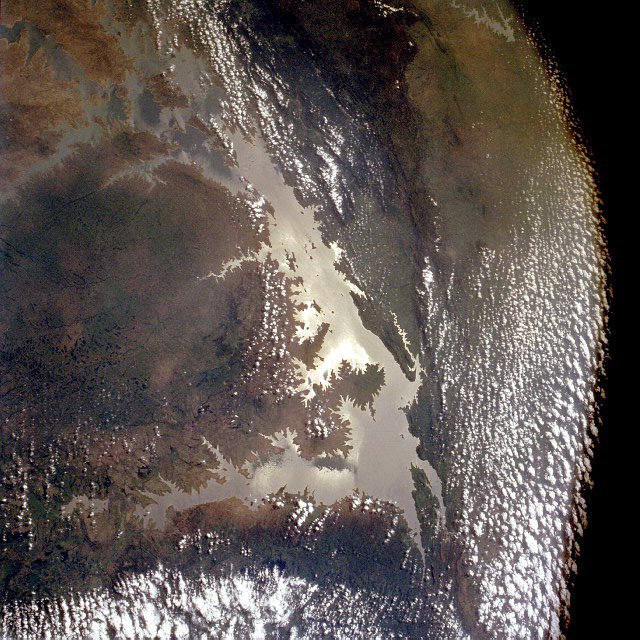
Lake Volta
Lake · Bono East Region
Lake Volta, the largest artificial reservoir in the world by surface area, is contained behind the Akosombo Dam which generates a substantial amount of Ghana's electricity. It is completely within the country of Ghana and has a surface area of 8,502 square kilometres (3,283 sq mi).
Text: Wikipedia (CC BY-SA 4.0). Photo: NASA (Public domain). Map

Akosombo Dam
Landmark · Eastern Region
The Akosombo Dam, also known as the Volta Dam, is a hydroelectric dam on the Volta River in southeastern Ghana in the Akosombo gorge and part of the Volta River Authority. The construction of the dam flooded part of the Volta River Basin and led to the subsequent creation of Lake Volta.
Text: Wikipedia (CC BY-SA 4.0). Photo: Phildawson (Public domain). Map

Lake Bosumtwi
Lake · Ashanti Region
Lake Bosomtwe, also spelled Bosumtwi, is the only natural lake in Ghana. It is situated within an ancient impact crater that is about 10.5 kilometres (6.5 mi) in diameter. It is about 30 km (19 mi) south-east of Kumasi, the capital of Ashanti, and is a popular recreational area.
Text: Wikipedia (CC BY-SA 4.0). Photo: Vesta (Public domain). Map

Kumasi
City · Ashanti Region
Kumasi is a city and the capital of the Kumasi Metropolitan Assembly and the Ashanti Region of Ghana. It is the second largest city in the country, with a population of 443,981 as of the 2021 census.
Text: Wikipedia (CC BY-SA 4.0). Photo: U.S. Embassy Ghana (Public domain). Map

Larabanga Mosque
Religious · Savannah Region
The Larabanga Mosque is a mosque built in the Sudanese architectural style in the village of Larabanga, Savanna Region of Ghana. It is the oldest mosque in the country and one of the oldest in West Africa, and has been referred to as the "Mecca of West Africa".
Text: Wikipedia (CC BY-SA 4.0). Photo: Sathyan Velumani (CC BY-SA 3.0). Map

Mole National Park
Park & nature · Northern Region
Mole National Park, one of Ghana's seven national parks, is the country's largest wildlife refuge. The park is located in the Savannah region of Ghana on savanna and riparian ecosystems at an elevation of 50 m, with a sharp escarpment forming the southern boundary of the park.
Text: Wikipedia (CC BY-SA 4.0). Photo: Neoesel (CC BY-SA 3.0). Map


Local know-how
Written by VoyaKin from the official sources named on each tip, and checked on the date shown.
Heritage
Cape Coast Castle
Cape Coast, Central Region
A coastal castle that grew from a Swedish fort of 1653 and was later enlarged by the English, who used it as a trading headquarters and seat of their governor. It is part of the UNESCO-listed Forts and Castles of Ghana and was deeply involved in the transatlantic slave trade. Today it is a museum run by the Ghana Museums and Monuments Board, with guided tours of the dungeons. Good to know: • These are places of mourning and remembrance for people who were enslaved. Tours are led by site guides; follow their instructions about where to walk, speak and take photos (no official published photography policy was found). • A guide interviewed by Smithsonian Magazine suggested visiting the small museum before the dungeon tour for context. • Groups should not exceed 70 people at a time; schools must book in writing three weeks ahead (GMMB museum rule).
Source: Forts and Castles, Volta, Greater Accra, Central and Western Regions (UNESCO World Heritage Centre) · checked November 5, 2026
St George's Castle (Elmina Castle)
Elmina, Central Region
Founded by the Portuguese in 1482, Elmina Castle is among the oldest European-built structures in sub-Saharan Africa. It began as a gold-trading post and later held enslaved Africans in converted storerooms. The Dutch captured it in 1637 and it passed to Britain in 1872. It now houses a GMMB museum. Good to know: • These are places of mourning and remembrance for people who were enslaved. Tours are led by site guides; follow their instructions about where to walk, speak and take photos (no official published photography policy was found). • Fort St Jago, on the hill opposite, is a separate component of the same World Heritage property.
Source: Forts and Castles, Volta, Greater Accra, Central and Western Regions (UNESCO World Heritage Centre) · checked November 5, 2026
Asante Traditional Buildings
Near Kumasi (Ejisu-Besease and other villages), Ashanti Region
A group of shrine buildings near Kumasi that UNESCO calls the last surviving examples of traditional Asante architecture. Built of timber, bamboo and mud plaster around courtyards, they carry bold bas-relief decorations linked to adinkra symbols. Some are still used for traditional religious practice. Good to know: • These are living religious sites: ask caretakers or traditional authorities before entering or photographing, and follow customary rules.
Source: Asante Traditional Buildings (UNESCO World Heritage Centre) · checked November 5, 2026
Manhyia Palace Museum
Kumasi, Ashanti Region
A museum in the former palace of Asantehene Prempeh I in Kumasi, built in 1925 after his return from exile. It presents the history of the Asante kingdom and its rulers. In 2024 some Asante royal objects taken by British forces in the 19th century returned to Kumasi on loan from UK museums. Good to know: • Manhyia is also the seat of the current Asantehene; follow palace protocol and staff directions.
Source: Manhyia Palace Museum (Manhyia Palace Museum (manhyiapalacemuseum.org)) · checked November 5, 2026
Assin Manso Ancestral Slave River Park
Assin Manso, Central Region
A memorial site inland from Cape Coast where, according to the Ghana Tourism Authority, captives being marched to the coastal forts were held and took a final bath in the Donkor Nsuo river. The site has an ancestral graveyard where remains of two people from the diaspora were reburied, and a Memorial Wall of Return. It hosts an annual Emancipation Day observance. Good to know: • This is a burial and remembrance site. GTA suggests visiting before Cape Coast Castle to follow the historic route. • Emancipation Day venues and programmes change by year; check the current year's official programme.
Source: Assin Manso Ancestral Slave River Site (Ghana Tourism Authority (visitghana.com)) · checked November 5, 2026
Kakum National Park
Near Cape Coast (Assin district), Central Region
A protected tropical forest north of Cape Coast, reclassified as a national park in 1992 together with the adjoining Assin Attandanso Resource Reserve. It is known for a canopy walkway of seven suspension bridges opened in 1995, and for forest wildlife such as Diana monkeys and forest elephants. It is on Ghana's UNESCO Tentative List. Good to know: • Wear good walking shoes and bring rain gear; a shortcut exit exists after the first bridge for those uncomfortable with heights. • Guided forest walks and night walks are offered; large wildlife is hard to see.
Source: Kakum National Park (Assin Attandanso Reserve) - Tentative List entry (UNESCO World Heritage Centre (text submitted by Ghana Museums and Monuments Board / Government of Ghana, 17 Jan 2000)) · checked November 5, 2026
Markets
Kejetia Market (Kumasi Central Market)
Kumasi, Ashanti Region
Kumasi's huge central market, which the Ghana Tourism Authority describes as among the largest open-air markets in West Africa. It is being redeveloped in phases. Good to know: • Very crowded; go with a local guide if unfamiliar.
Source: Ashanti Region (Ghana Tourism Authority (visitghana.com)) · checked November 5, 2026
Culture
Kente weaving villages: Adanwomase and Bonwire
Near Kumasi (Kwabre / Ejisu area), Ashanti Region
Kente is a strip-woven cloth made by Asante and Ewe weavers on narrow looms, with strips sewn together into large cloths. Adanwomase and nearby Bonwire are long-standing weaving communities near Kumasi associated with the Asante royal court. Visitors can watch and try weaving at community visitor centres. Good to know: • Start at the village visitor centre to arrange a guide; longer sessions with master weavers should be booked ahead. • Buy directly from weavers where possible and ask before photographing people at work.
Source: Kente (object CIRC.321-1964) (Victoria and Albert Museum) · checked November 5, 2026
Adinkra cloth-making at Ntonso
Ntonso (near Kumasi), Ashanti Region
Adinkra is an Asante cloth printed with symbols that carry proverbs and ideas. Makers carve stamps from calabash and print with a dye made by boiling the bark of the badie tree. Ntonso is presented by the Ghana Tourism Authority as the home of traditional adinkra, with a visitor centre and guided tours. Good to know: • Book through the Ntonso visitor centre; official guides lead tours. • Funeral-associated colours and symbols have meaning; ask makers before wearing cloth for an occasion.
Source: Woven, Inscribed, Enfolded, Encased: Adinkra from Kumase to the British Museum (Adrian Anagnost) (British Art Studies, Issue 28 (Paul Mellon Centre / Yale Center for British Art), Nov 2025) · checked November 5, 2026
Festivals
PANAFEST (Pan-African Historical Theatre Festival)
Cape Coast, Central Region
PANAFEST is a pan-African arts and remembrance festival based in Cape Coast, linked to the vision of Ghanaian dramatist Efua Sutherland. It is held every two years and is closely tied to Emancipation Day events, including a Reverential Night at Cape Coast Castle. Good to know: • Reverential Night is a solemn commemoration; dress and behave as at a memorial service.
Source: Emancipation Day: Reverential Night honours memory of Efua Sutherland (1 Aug 2024) (Ghana News Agency) · checked November 5, 2026
Akwasidae (Adae)
Kumasi (Manhyia Palace), Ashanti Region
Akwasidae is a recurring Asante ceremony held on a Sunday at Manhyia Palace in Kumasi, when ancestors are honoured and the public pays homage to the Asantehene. It recurs on a roughly six-week cycle of the Akan calendar, so it happens several times a year. Good to know: • A royal and religious occasion: follow palace officials' instructions, dress respectfully, and ask before photographing chiefs.
Source: Akwasidae Festival (event listing) (Ghana Tourism Authority (visitghana.com)) · checked November 5, 2026
Aboakyer (Deer Hunt Festival)
Winneba, Central Region
Aboakyer is the Effutu people's festival in Winneba in which two Asafo (warrior) companies race to catch a live deer with bare hands and simple clubs. The first company to present it to the paramount chief wins. It honours the deity Penkyi Otu and marks the Effutu migration story. Good to know: • Large crowds gather at the durbar grounds; respect shrine areas and instructions from Asafo and traditional officials.
Source: Aboakyer Festival (Ghana Tourism Authority (visitghana.com)) · checked November 5, 2026
Hogbetsotso Za
Anloga, Volta Region
Hogbetsotso is the Anlo-Ewe festival recalling their ancestors' escape from the walled city of Notsie (in present-day Togo) under the harsh King Agorkoli. Oral tradition says the people walked out backwards to mislead pursuers. It includes peace-making and cleansing rites and culminates in a grand durbar of chiefs in Anloga. Good to know: • Chiefs sit in state at the durbar; ask permission before close-up photography and follow organisers' seating instructions.
Source: Hogbetsotso Za festival (Ghana Tourism Authority (visitghana.com)) · checked November 5, 2026
Food
Kenkey
Nationwide (strongly associated with Ga and Fante communities), Greater Accra Region
Kenkey is a sour dumpling of fermented maize dough. Part of the dough is cooked, mixed back with raw dough, shaped into balls, wrapped in dried maize husks or plantain leaves and steamed or boiled. Styles vary across Ghana. Good to know: • Commonly sold by street vendors; eat with the right hand if eating by hand.
Source: Fermented Cereals: A Global Perspective - Ch. 2, Cereal fermentations in African countries (Food and Agriculture Organization of the United Nations (FAO)) · checked November 5, 2026
Banku
Southern Ghana, Greater Accra Region
Banku is a smooth, stiff dough made from fermented maize, or maize mixed with cassava, cooked and stirred with water. It is a staple in southern Ghana and is often served with okro stew or pepper sauce.
Source: Fermented Cereals: A Global Perspective - Ch. 2, Cereal fermentations in African countries (Food and Agriculture Organization of the United Nations (FAO)) · checked November 5, 2026
Fufu
Nationwide (originally associated with the Ashanti Region), Ashanti Region
Fufu is a soft, stretchy staple made by boiling starchy foods such as plantain and cassava and pounding them into a smooth paste. It is commonly eaten with soups such as light soup. Industrial fufu flours are also now common.
Source: Glycemic index of some local staples in Ghana (Eli-Cophie, Agbenorhevi, Annan; Food Science & Nutrition 2016, 5(1):131-138) (Wiley / PubMed Central (KNUST authors)) · checked November 5, 2026
Waakye
Nationwide (northern origins often cited), Greater Accra Region
Waakye is a popular rice-and-beans dish cooked with dried sorghum leaf sheaths, which give it a reddish-brown colour. The leaves are removed before serving.
Source: Bioactive constituents of waakye; a local Ghanaian dish prepared with Sorghum bicolor (L.) Moench leaf sheaths (Tugli et al., Scientific African, 2019) (Elsevier - Scientific African (indexed in DOAJ)) · checked November 5, 2026
History
Ghana's forts and castles and the transatlantic slave trade
Along about 500 km of Ghana's coast, from Keta in the east to Beyin in the west, stand the remains of fortified trading posts built between 1482 and 1786. Traders from Portugal, Spain, Denmark, Sweden, the Netherlands, Germany and Britain built and occupied them at different times. UNESCO inscribed them as a World Heritage property in 1979, and the Ghana Museums and Monuments Board (GMMB) is their legal custodian [unesco_whc_34; gmmb_home]. The oldest, St George's Castle at Elmina, was founded by the Portuguese in 1482 and captured by the Dutch in 1637 [unesco_whc_34; gta_elmina_castle]. Cape Coast Castle grew from a Swedish fort of 1653 and changed hands several times before the English took it in the 1660s; sources give 1664 or 1665 [gmmb_cape_coast_castle; gta_cape_coast_castle]. For their first centuries the posts mainly served the gold trade of European chartered companies. Later they became central to the trade in enslaved Africans, and in the 19th century they also played a part in suppressing it. At Elmina, storerooms were turned into dungeons as captives replaced gold as the main trade. Britain banned its slave trade in 1807. The SlaveVoyages database estimates that about 12.5 million people were embarked from Africa between 1501 and 1866. About 1.2 million left from the region it calls the Gold Coast, most of them in the 18th century. These are modelled estimates, and historians revise them. Some yearly figures quoted on heritage pages are much higher than the database suggests, so VoyaKin uses the database totals [slavevoyages_estimates; gmmb_cape_coast_castle]. Many captives were marched from the interior. At Assin Manso, the Ghana Tourism Authority marks a river where captives were held and bathed before the last stage to the coast. African states and merchants also took part in the trade. The Asante kingdom's wealth, for example, rested partly on trade in gold and enslaved people. UNESCO calls the forts a monument both to the evils of the slave trade and to centuries of Afro-European commerce, and a starting point of the African Diaspora. Today the dungeons are also places of remembrance. At Cape Coast, visitors leave wreaths and offerings in a shrine chamber.
Source: Forts and Castles, Volta, Greater Accra, Central and Western Regions (UNESCO World Heritage Centre) · checked November 5, 2026
Ghana and the African diaspora: Du Bois, Nkrumah and the Year of Return
On 6 March 1957 the Gold Coast became independent Ghana, the first sub-Saharan African colony to free itself from European rule. Kwame Nkrumah proclaimed independence at the Old Polo Grounds in Accra [britannica_ghana_independence; moi_independence_2023]. Nkrumah, Ghana's first president, saw African freedom as connected to people of African descent around the world [knmp_official; un_africa_renewal_yor]. He and his wife Fathia are buried in the Kwame Nkrumah Memorial Park near the site of the declaration. In 1961 Nkrumah invited the African American scholar W.E.B. Du Bois to lead the Encyclopedia Africana project. Du Bois settled in Accra, became a Ghanaian citizen, and died there in 1963 [gta_dubois; un_africa_renewal_yor]. His home became the W.E.B. Du Bois Centre in 1985. He and Shirley Graham Du Bois are buried there, and an Emancipation Day wreath-laying is held at the centre. Ghana later made these ties part of law. The Immigration Act of 2000 created a 'Right of Abode' for people of African descent in the diaspora, and the Citizenship Act of 2000 allowed dual citizenship. In 2007, Ghana's 50th year of independence, the Joseph Project invited the diaspora to reconnect. Cape Coast's PANAFEST festival, credited to the dramatist Efua Sutherland, and Emancipation Day remembrances around 1 August bring together arts, mourning and celebration [gna_reverential_night_2024; gta_assin_manso]. In September 2018, at the National Press Club in Washington, D.C., President Nana Akufo-Addo declared 2019 the 'Year of Return'. It marked 400 years since the first recorded arrival of enslaved Africans in English North America in 1619 [graphic_yor_2018; un_africa_renewal_yor]. It was followed in 2020 by 'Beyond the Return', a ten-year programme (2020-2030) whose aims include encouraging people to experience, invest in and give back to Ghana. These programmes speak especially to the global African family. Ghana's heritage sites are open to everyone, and visitors come for many reasons: family history, study, faith, or wanting to understand this history [graphic_yor_2018; unesco_whc_34]. VoyaKin does not assume any traveller's ancestry or purpose.
Source: When did Ghana achieve independence from colonial rule? (Encyclopaedia Britannica) · checked November 5, 2026
The Asante kingdom and Akan traditions visitors will meet
The Asante are one of several Akan-speaking peoples who settled in Ghana's forest zone, probably between the 11th and 13th centuries. In the 1670s Osei Tutu united separate chiefdoms. He took the title Asantehene around 1696 and made Kumasi the capital, and the Golden Stool became the symbol of the union and its kingship. Historians give slightly different dates for these steps. By about 1750 Asante was the most powerful state in the region, and its wealth rested on gold and on trade that included enslaved people. In the 19th century Asante fought several wars with Britain. British forces took and looted Kumasi in 1874, exiled Asantehene Prempeh I in the 1890s, defeated a 1900 uprising led by Queen Mother Yaa Asantewaa, and annexed Asante in 1902. Prempeh I returned in 1924 and was restored in 1926. His 1925 residence is now the Manhyia Palace Museum [asc_leiden_asante; manhyia_museum]. Succession to the Golden Stool is matrilineal, and today the Asantehene's role is chiefly cultural and civic within democratic Ghana. In 2024 some royal objects taken by British forces returned to Kumasi on loan from UK museums. Visitors meet this heritage in several forms. Shrine buildings near Kumasi, a UNESCO site, have earthen walls decorated with reliefs tied to adinkra symbols, and some are still places of worship. Kente is woven by men on narrow looms in strips that are sewn together. Asante and Ewe weavers have different styles, and pattern names often recall proverbs or events [vam_kente; gta_adanwomase]. Adinkra cloth is stamped with carved calabash and a dye made from badie bark. It began as an elite mourning cloth, and accounts of its origin differ. At Akwasidae, held on a Sunday about every six weeks at Manhyia Palace, ancestors are honoured and the public pays homage to the Asantehene.
Source: Asante Kingdom (Library web dossier; intro updated 2024 by Germa Seuren) (African Studies Centre Leiden (Leiden University)) · checked November 5, 2026
Keep exploring
Questions only someone who’s been can answer? Join the Ghana Circle to meet travelers and people who live there.
Cities: Accra
Also in Western Africa: Senegal · Benin · Burkina Faso · Cape Verde · Côte d’Ivoire · Gambia · Guinea · Guinea-Bissau
Last updated November 8, 2026. Sources: Wikipedia (CC BY-SA 4.0), Wikimedia Commons, OpenStreetMap (ODbL), official tourism and government sources named on each tip. Partner offers below are separate from this guide and never change what’s written here.
Plan & book Ghana
Partner linksVoyaKin may earn a commission if you book through a partner link. It doesn’t change your price. How we work with partners
Flights
Kiwi.com
Search flights on Kiwi.com
Compare routes to and from this country.
Partner link. VoyaKin may earn a commission if you book through this link, at no extra cost to you.
Stays
Partner links via Wink. Rooms, prices and availability are shown on Wink’s site.
Tours & experiences
 2 hAfrican Drum and Dance Lessons 5.0 (38)From US$55 on Viator
 192 hGhana Heritage Tours - Beyond The Return 5.0 (38)From US$3,595 on Viator
 1 h–2 hMakola Market Walking Tour 5.0 (33)From US$41 on Viator
 13 h–14 hPrivate Cape Coast Castle, Assin Manso & Kakum Tour from Accra 5.0 (33)From US$265 on Viator
 10 h–16 hAccra: Cape Coast Castle and Kakum Canopy Walk Day Tour 5.0 (32)From US$175 on Viator
 4 h–7 hFull-Day Private Culture and History Tour of Accra 5.0 (29)From US$100 on Viator
 10 h–12 hCape Coast/Elmina Slave Dungeon and Canopy Walkway Private Tour 5.0 (28)From US$200 on Viator
 1 h–5 hExperience Authentic Ghana in a Personalized Accra City Tour 5.0 (27)From US$100 on Viator
 8 hFull Day Tour Waterfalls Quad biking and Aburi Botanical Gardens 5.0 (26)From US$250 on Viator
 11 hPrivate Sightseeing Tour in Ghana 5.0 (22)From US$300 on Viator
Partner links via Viator. Ratings, reviews and prices come from Viator and may change. VoyaKin may earn a commission if you book through a partner link. It doesn’t change your price.
eSIM & staying connected
Saily
Stay connected: get an eSIM before you fly.
VoyaKin travelers get US$5 off their first Saily plan with code VOYAKIN9122.
VoyaKin readers’ code
Partner link. VoyaKin may earn a commission if you book through this link, at no extra cost to you.
Partner linksVoyaKin may earn a commission if you book through a partner link. It doesn’t change your price. How we work with partners